Octane, Redshift, Arnold, V-Ray: Which Render Engine for a Luxury Film?
There is no best render engine. There is a best engine for your scene. A diamond does not have the same physical demands as tweed, and car paint is not treated like skin. After fifteen years of 3D films for luxury houses, here is my decision grid — and a tool to decide in ten seconds.
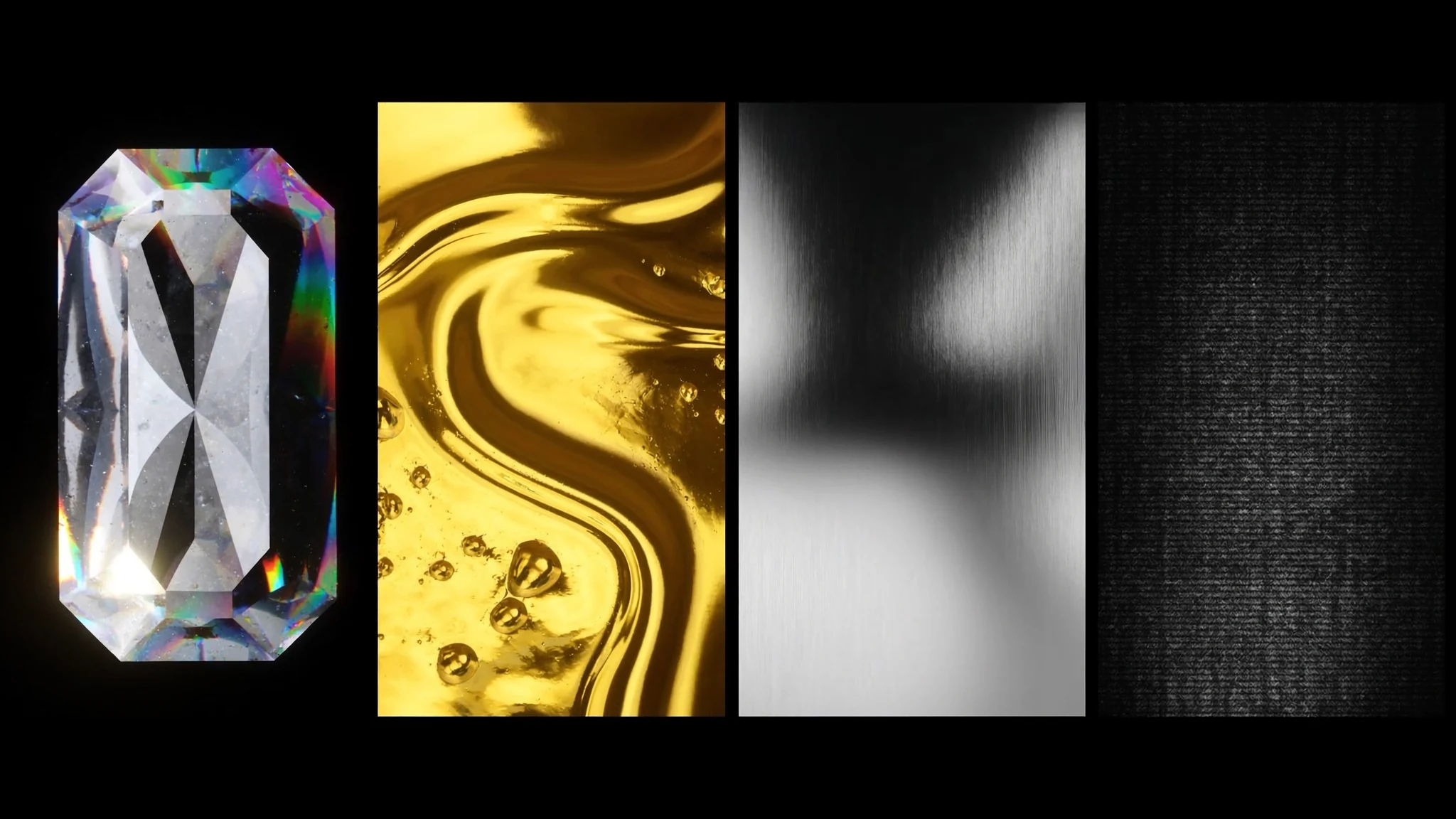
Choosing the engine is an art direction decision
The render engine is often presented as a technical choice, almost plumbing. It is not. The engine decides how light passes through a bottle, catches the facets of a stone or glides over grained leather. On a luxury film, where the material is the message, this choice is as structuring as the choice of lens on a real shoot.
Four engines dominate high-end production: Octane (spectral unbiased, GPU), Redshift (biased, built for animated production), Arnold (the reference for organic materials) and V-Ray (the veteran of industrial precision). None wins everywhere. Each crushes the others on its own ground.
My decision grid, material by material
Jewellery and liquids: Octane, no debate. Spectral dispersion — the fire of a diamond, the true gold of a champagne — is physically computed, not imitated. Animated packshots, leather, sets: Redshift, because in production you iterate fifty times on a light, and iteration speed is an artistic quality. Skin, fabrics, fur: Arnold, whose random walk subsurface and hair shader remain unmatched. Watchmaking and automotive: V-Ray, for the precision of micro-details and its reference multi-layer car paint.
To go faster, I turned this grid into an interactive tool: type your scene (diamond, watch, car, haute couture, fragrance…) and get the verdict, a credible alternative and three key settings. → Open the tool: which render engine for your scene?
What it changes on a real film
On a recent watchmaking campaign, switching from a biased engine to spectral rendering on the macro shots of the dial changed the perception of the product: the coloured highlights on the mirror polish finally gave the feeling of holding the object. Conversely, on a 40-second animated cosmetics packshot, no client will see the spectral difference — but everyone will see that you were able to deliver three more lighting directions in the same timeframe.
Iteration speed is an artistic quality: every hour of rendering saved is an hour of art direction gained.
So the right reflex is not "what is the best engine?" but "what does my scene physically demand, and how many iterations does my schedule allow?". That is exactly what the tool encodes: physics first, production second.
Looking for a trusted art director and motion designer for your project?